Co-living hasn’t died. It’s evolved from a rental hack into a structured operational business. Whether it still works for you depends less on the model itself and more on how you approach it: what you enter at, whether you lease or own, and whether you can operate it professionally.
Is Co-Living Still Profitable in Singapore in 2026?
A breakdown of what changed since 2021, the real numbers behind lease-to-sublease versus owning, and how to evaluate whether the model still works as an investor. No hype, no course, no upside-only math.
What you need to know before entering co-living.
In 2021, a co-living operator could pull $5,000+ in monthly profit from a single Singapore property. In 2026, the same strategy can leave you paying rent out of pocket with rooms sitting vacant. The model hasn’t broken. The conditions that made it easy have.
This guide walks through what actually changed, the real numbers behind lease-to-sublease versus owning, and how to evaluate whether co-living still makes financial sense as an investor in 2026.

What co-living actually is
Strip away the marketing and co-living is a simple idea applied to residential property: take one space, divide it into smaller rentable units. The same logic behind coworking desks or exhibition booths, adapted for homes.
The important shift is what it does to how you treat the property. You stop treating it as a home and start operating it as a business. Instead of renting the whole unit to one tenant, you rent individual rooms. In more aggressive setups, you reconfigure the layout, partition rooms, add rentable units to squeeze more yield.
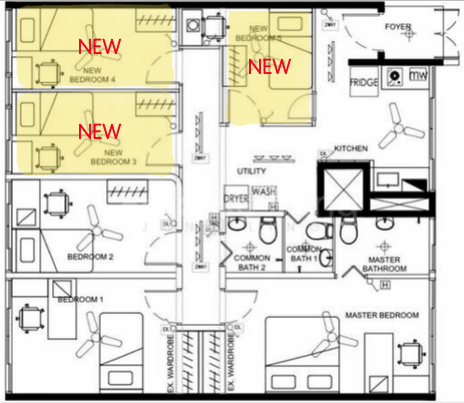
A typical partition setup — original 3-bedroom converted to 6 rentable rooms (new bedrooms highlighted).
The math looks compelling on paper.
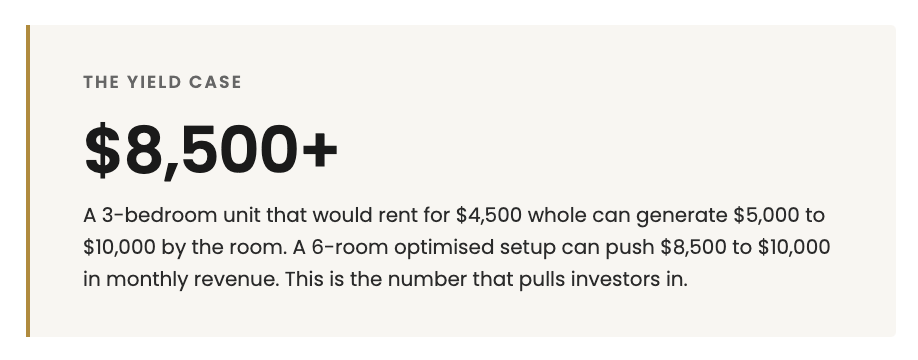
The problem is that most people stop thinking here. They see the top-line revenue and assume the rest works itself out. In 2021, it often did. In 2026, that assumption is what makes people lose money.
Why co-living worked before 2023
To understand today’s reality, you have to see what made the previous cycle so forgiving. Three conditions lined up at the same time, and most operators mistook the market for their model.
The rental boom. Post-Covid, the rental market overcorrected. Expats flooded back. Construction delays meant fewer new homes. Demand spiked, supply stayed tight, rents surged across the board. Room-by-room operators benefited disproportionately because they were multiplying their exposure to rising rents.
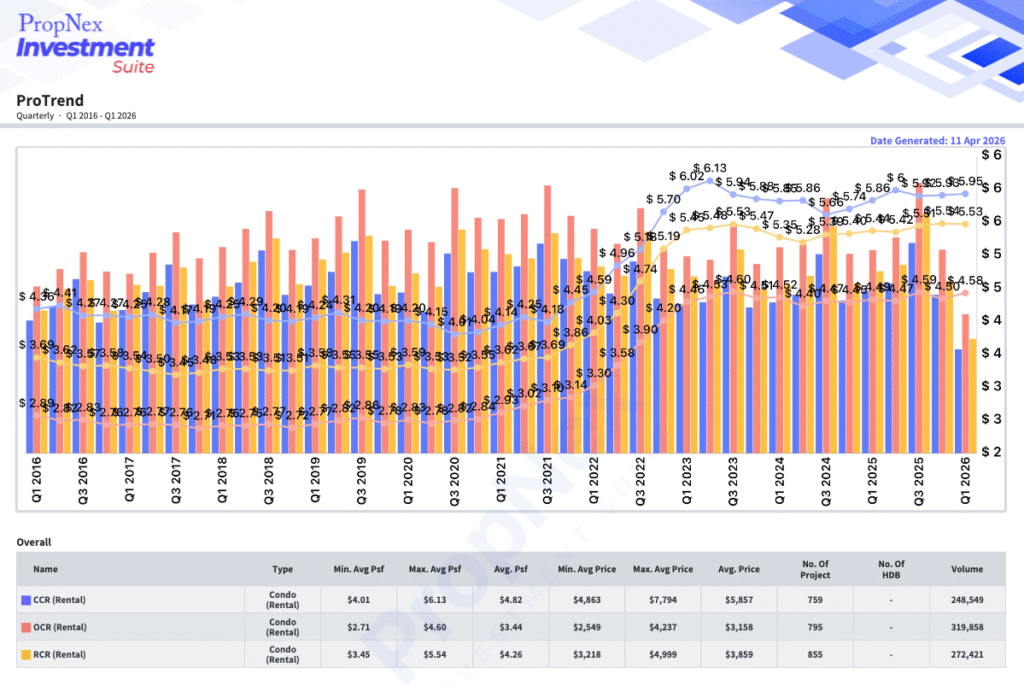
PropNex Investment Suite · ProTrend rental data Q1 2016 to Q1 2026 showing the post-Covid rental surge.
Almost no competition. Serious operators (Cove, Coliwoo, Habyt) were still few. Barriers to entry felt low: lease a unit, renovate lightly, sublet. Even average setups hit high occupancy because demand outpaced supply everywhere.
Wide margin gap. Master lease costs were locked in when rents were still low. Room rents climbed month over month. The spread widened faster than costs could catch up. A $4,000 master lease could throw off $10,000 to $12,000 in room rent revenue.
These three conditions together produced a dangerous narrative: co-living was scalable, low-risk, and easy money. In reality, it wasn’t the model that was easy. It was the market that was forgiving.
What has changed
Four structural shifts have re-priced the entire strategy. None of them are reversible in the short term.
Shift 1 · Revenue Ceiling
Rents have stabilised, so the safety net is gone.
Rental growth hasn’t collapsed, but it has clearly slowed. In several segments it’s plateauing. That changes the underwriting math completely.
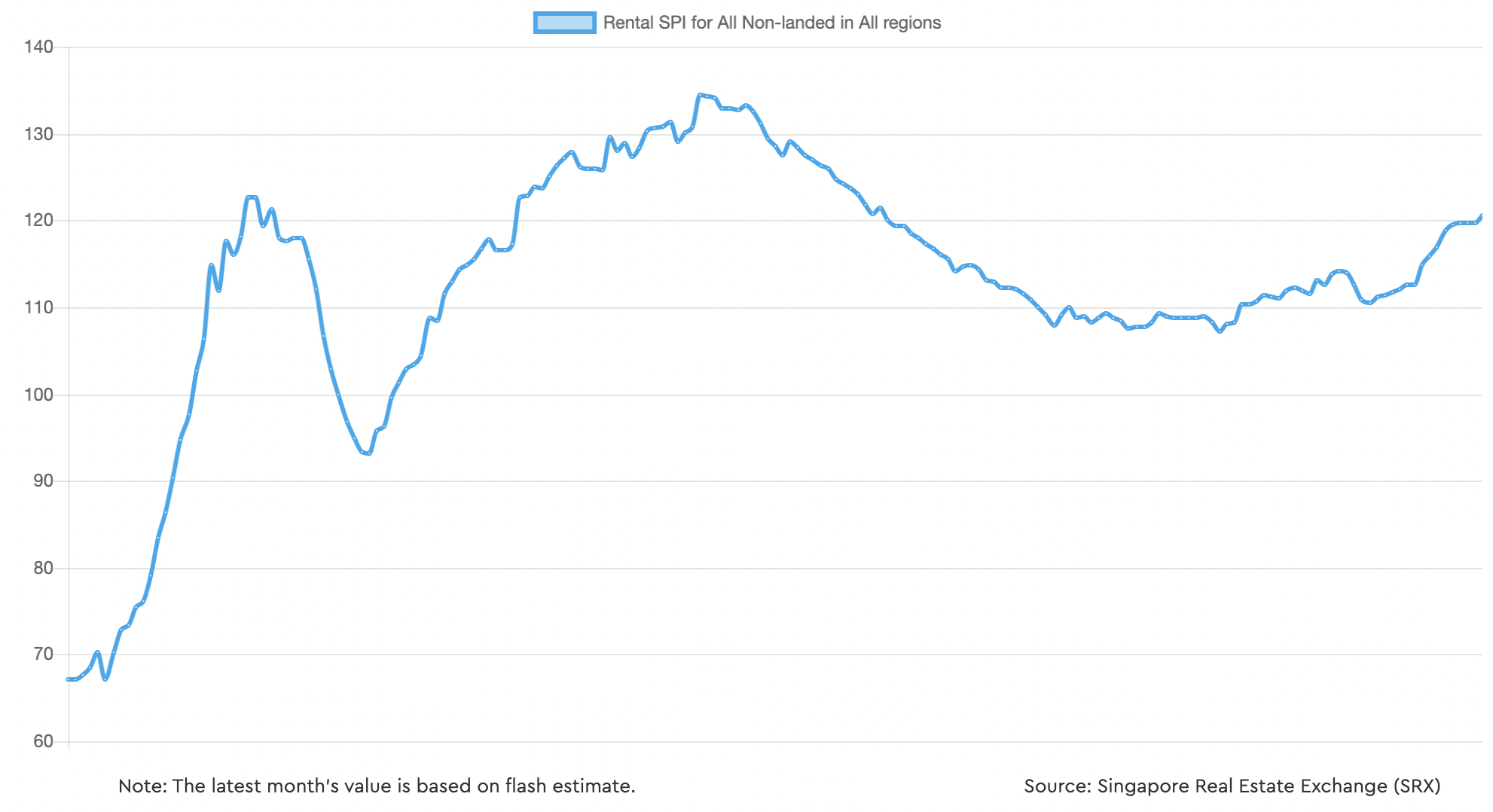
Previously, you could rely on rising rents to fix mistakes. Underperforming unit? Wait it out, market goes up, you recover. Today that cushion doesn’t exist. Every deal now has to work on today’s rent, not tomorrow’s.
The question you should be asking: if rents don’t move for the next 12 to 24 months, does this deal still make sense? If not, the model is already too tight.
Shift 2 · Cost Compression
Operating costs have quietly stacked up.
The costs that make co-living work often get buried in optimistic pro-formas. In 2026 they’re impossible to ignore:
- Utilities: $400 to $600 per month
- Cleaning: $80 to $120 per week
- Aircon servicing, furniture replacement, maintenance on cheap renovations
- Agent fees on higher tenant turnover
- If you own: MCST and non-owner-occupied property tax on top
These aren’t nice-to-haves. They’re the cost of keeping the unit running. Missing any of them from your underwriting is how a “$3,000/month profit” becomes an out of pocket expense.
Shift 3 · Real Competition
Tenants have options now. You don't set the price.
Every investor has seen the same strategy. More co-living units in the market, more professional operators with better systems, better-designed and better-furnished spaces.
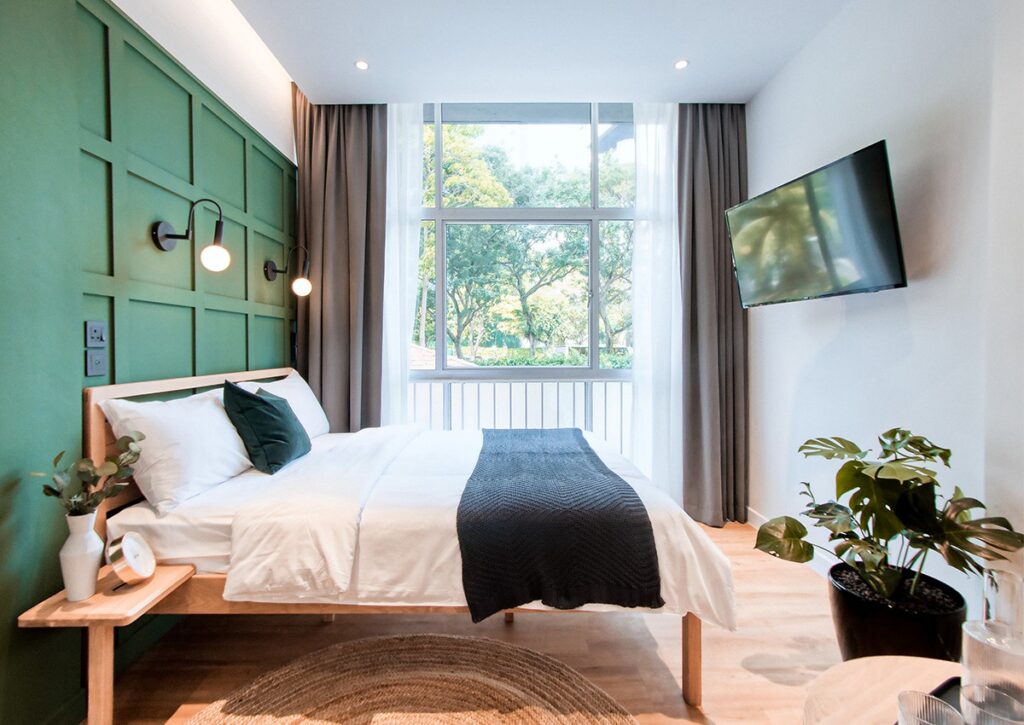
The result: tenants have real options. You are no longer pricing based on what you want to achieve. You are pricing based on what the market will accept. If your unit isn’t competitive on price, layout, or condition, it won’t fill. And vacancy is where profits disappear.
Shift 4 · Execution Risk
It's a hospitality business, not passive income.
Co-living was marketed as passive. In reality it behaves closer to a small hotel. You’re managing 5 to 8 individuals with different lifestyles, expectations, and tolerances. Conflicts happen. Maintenance calls come in. Turnover is frequent.

Without systems, this becomes extremely time-intensive. Your hidden cost isn’t just money. It’s your attention, your evenings, and your ability to manage people.
Put the four together and today’s picture is clear: revenue is no longer expanding, costs are rising, competition is stronger, operations are heavier. Co-living hasn’t died. It’s just no longer an easy-money strategy. It’s now a tight, execution-heavy business.
The real numbers: Lease vs Own
The clearest way to see what’s changed is to run a realistic scenario. Same property. Same revenue. Two entry strategies.
Scenario: 6-room co-living setup generating $8,500 in monthly revenue.
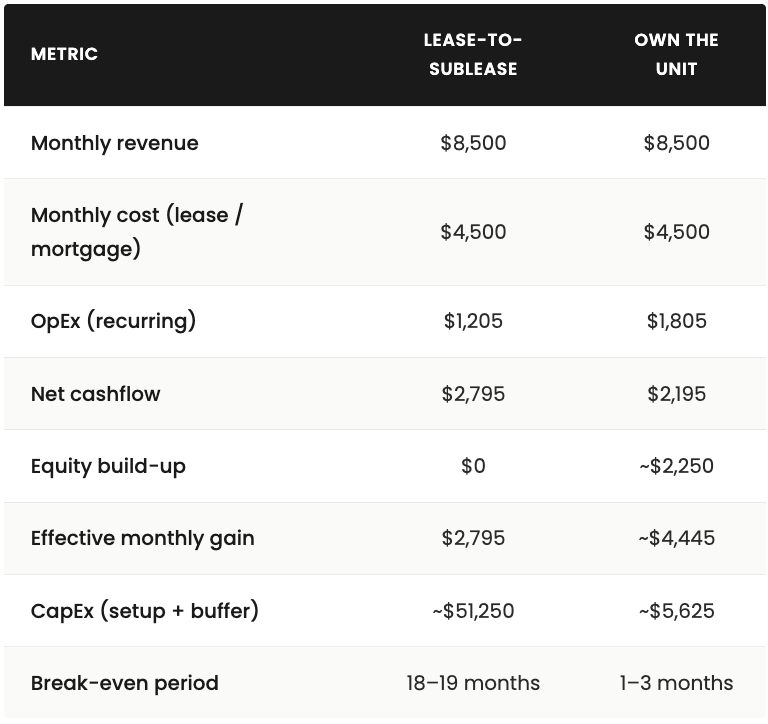
Illustrative figures based on typical 6-room configurations. Actual returns vary by unit, layout, and location.
The headline profit looks better on the lease side. Look again. Owning generates half the reported cashflow but builds equity, backs the position with a real asset, and clears break-even in months rather than years.
Now stress-test both against vacancy, which is the real killer in 2026:
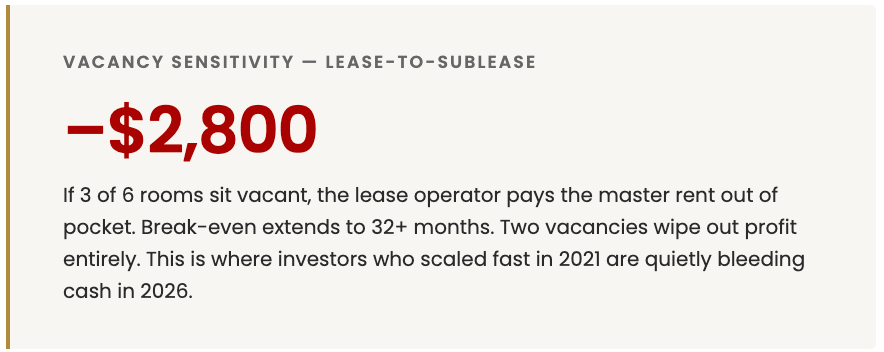
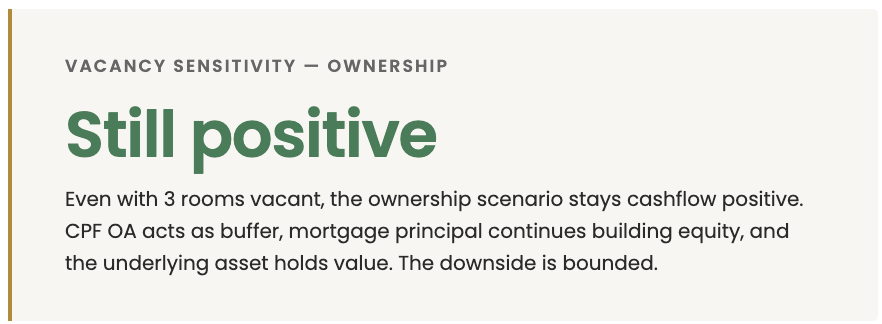
This is why smarter investors today aren’t leaving co-living. They’re shifting away from building it from scratch and toward owning ready-made setups that already have the layout, tenants, and cash flow in place.
What actually works today
Co-living hasn’t disappeared. It’s become selective. Success is no longer about doing more units. It’s about doing the right units properly. Five things separate the operators making money in 2026 from those quietly losing it.
1. Entry price discipline
If you overpay, especially on lease-to-sublease, no strategy recovers you. Returns compress from day one. You’re forced to push rents above market, take lower-quality tenants, or accept thinner margins. In a competitive market that doesn’t hold. The question isn’t “can this unit generate $8,000?” It’s “am I entering at a price where I’m protected if a room sits empty for two months?”
2. Layout beats size
People chase square footage. In co-living, efficiency matters more. You’ll want minimal wasted space, clean separation between rooms, functional common areas, low room-to-bathroom ratios. Layout directly determines how many rooms you can rent, how private tenants feel, and how long they stay. A poorly designed 3-bedder feels cramped, creates friction, and drives turnover. A well-designed one keeps tenants two years instead of six months.
3. Location is non-negotiable
You’re not just buying a property. You’re also buying a tenant catchment. Co-living tenants prioritise convenience, connectivity, lifestyle. What works: walking distance to MRT, near business hubs (CBD, One-North, Changi), close to universities. Without this you’re permanently fighting vacancy.
4. Tenant profiling
Not all tenants are equal. Wrong tenants create turnover, complaints, wear-and-tear, and management overhead. Right tenants stay longer, pay on time, maintain the space, and improve the atmosphere for other tenants. Filling rooms isn’t the goal. Curating the right tenant mix is where stability and real returns come from.
5. Systems and operations
This is what separates amateurs from professionals. Cleaning schedules, maintenance workflows, tenant communication, turnover management — all of it has to be structured, not reactive. Without systems, problems pile up, tenant experience drops, vacancy rises. Returns leak through operational cracks.
The verdict: lease vs own in 2026
Same $8,500 in revenue, two completely different risk profiles. Neither is universally right. Which one fits depends on your capital position, your risk tolerance, and your appetite for operating a small business.
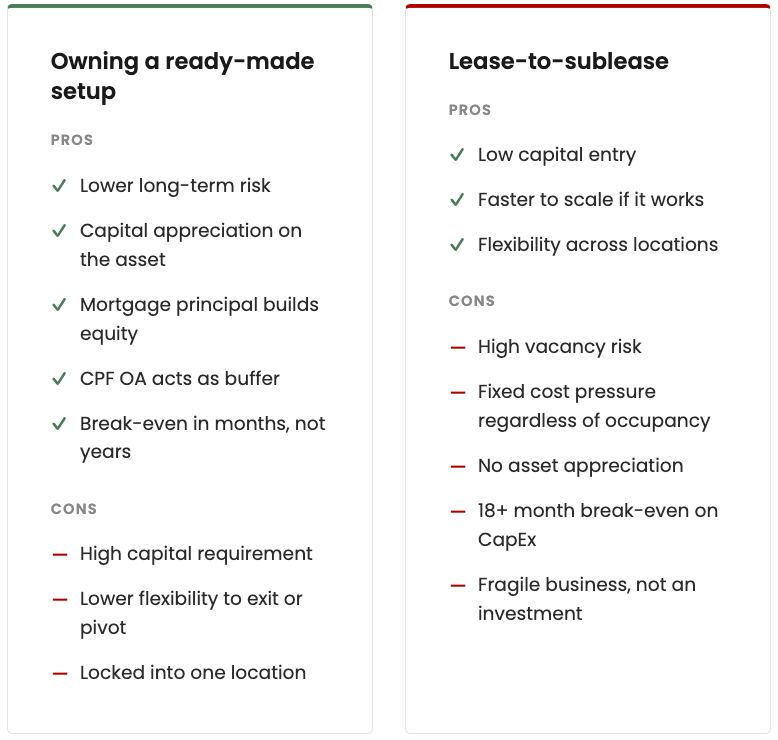
The real question isn’t whether co-living still works. It’s whether you’re doing it the risky way or the smart way. The risky way is scaling lease-to-sublease units on 2021 assumptions. The smart way is owning fewer, better-positioned units with layouts and locations that hold rent regardless of the market cycle.
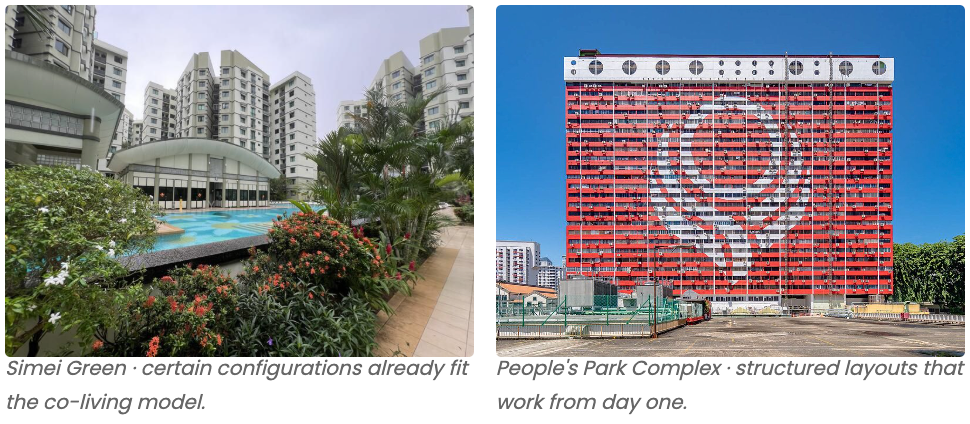
Not every property in Singapore works for co-living. Some are already structured to give you a clear advantage from day one — buildings like People’s Park Complex, or certain configurations at Simei Green, are examples of layouts that already fit the model without requiring heavy CapEx.
Want specific co-living units I have on hand?
Every property has different trade-offs on entry price, layout, and location. Send me a message and we’ll walk through what fits your capital position and risk profile.
About June Ling
A well-established name in the real estate industry, June Ling is a two-time Rising Millionaire (2024, 2025) with a proven track record of transacting over S$80 million in real estate. She began her career as the company-wide Top Rookie of the Year in 2023 and has since built and led a high-performing team.
Renowned for her strategic insight, market clarity, and disciplined execution, June advises clients across private residential, HDB, and co-living investments. Her approach goes beyond transactions, focusing on structuring decisions that align with long-term wealth objectives. Whether guiding homeowners, investors, or first-time buyers, June delivers clear, data-driven advice and seamless execution across every stage of the process.

FAQ
Yes, but selectively. The 2021-era of easy profits is over. Rental growth has slowed, operating costs have risen, and competition is stronger. For operators who enter at the right price with the right property, in the right location, run with professional systems, co-living still works. For those replicating 2021 assumptions on 2026 conditions, it typically loses money.
On a well-configured 6-room setup generating $8,500 in monthly revenue, realistic cashflow ranges from around $2,000 to $3,000 per month, depending on lease vs own structure. Adjusted for equity build-up, an ownership scenario produces closer to $4,000 to $4,500 effective monthly gain. These figures assume full occupancy; each vacant room can reduce net profit by $1,000+ per month.
Depends on capital position and risk tolerance. Lease-to-sublease has low capital entry but 18+ month break-even on CapEx and severe vacancy risk (three empty rooms means paying out of pocket). Ownership requires more capital but breaks even in months, builds equity, and stays cashflow positive even under partial vacancy. For most investors in 2026, ownership is the lower-risk long-term play.
For lease-to-sublease, expect around $50,000 to $60,000 in setup CapEx: renovation, furniture, deposits, and a vacancy buffer. For an ownership scenario using a ready-made setup, CapEx drops closer to $5,000 to $10,000, since the layout and furnishing are already in place. Ongoing operating costs run around $1,200 to $1,800 per month depending on utilities, cleaning, and property tax structure.
Location fundamentals matter more than project prestige. Walking distance to MRT, proximity to business hubs (CBD, One-North, Changi), or near universities produces the strongest tenant catchment. Buildings with efficient existing layouts, room-friendly configurations, and reasonable purchase psf work best. Some older developments, including People’s Park Complex and certain Simei Green configurations, are already structured for co-living without heavy renovation.
Vacancy is the biggest financial risk. Three empty rooms on a lease-to-sublease unit typically wipes out profit and pushes the operator into monthly losses. Operational fatigue is the biggest hidden risk: co-living behaves like a small hotel with 5-8 tenants, turnover, maintenance, conflicts. Without systems, it becomes time-intensive. The third risk is entry price on lease agreements: overpaying at the master lease stage leaves no margin for market softening.