
How Much Cash Do You Really Get
After Selling Your HDB?

A plain-English walk-through of where your sale price actually goes, so you can plan your condo budget from real numbers instead of hopeful ones.

What you need to know before you sell.

Key Takeaways

1

Your sale price is not your budget. What counts is the cash left after your HDB loan, your CPF refund and your selling costs come out.

2

In our example, a $650,000 sale leaves about $283,000 in cash, with another $200,000 going back into your CPF Ordinary Account.

3

The CPF refund is your own money plus 2.5% accrued interest. It is not a loss, but it is not spendable cash either.

4

You can check most of your numbers in one afternoon: your Singpass CPF dashboard, your loan statement and a written cost estimate from your agent and lawyer.

5

Plan your condo budget with two numbers, cash and CPF, and keep a buffer for stamp duty, legal fees, renovation and moving.

The number that trips up most upgraders

Most HDB owners I meet start the same way. They tell me, “My flat can sell for $650,000, so I have about $650,000 to work with.” I completely understand why. It is the biggest number on the page, and it is the one everyone talks about at the kopitiam.

Tbh, that is the number that trips up the most upgraders. Your sale price is not your budget. It is where the story starts, not where it ends. By the time your sale completes, a few things have to come out of that number, and they are not small.

I want to walk you through all of them, slowly, with a real example. By the end you should be able to work out your own figure in about an afternoon, and walk into your first condo viewing knowing exactly what you can afford. That is a much calmer way to house hunt.

Where a $650,000 sale price actually goes

Let us use round numbers. Say your HDB sells for $650,000. Three things come out before any cash lands in your hands: the loan you still owe, the CPF you used (with interest), and your selling costs.

Where a $650,000 HDB sale price goes. Sale price $650,000, HDB loan $150,000, CPF refund $200,000, Selling costs $17,000, Cash in hand $283,000Where a $650,000 HDB sale price goes$650,000Sale price-$150,000HDB loanoutstanding-$200,000CPF refundplus 2.5% interest-$17,000Selling costsagent + legal$283,000Cash in handIllustration only. Your numbers depend on your loan, CPF usage and costs.

Swipe sideways to see the full chart

In this example, you walk away with about $283,000 in cash, and about $200,000 returns to your CPF. Together that is $483,000, which is a long way from $650,000. The difference is simply what you already owed and what it cost to sell.

Step 1: your outstanding HDB loan

The first deduction is the easiest to understand. If you still owe money on your HDB loan or bank loan, it gets paid off from your sale proceeds on completion day. In our example that is $150,000.

To find your number, check your latest loan statement or log in to your bank or HDB account. Ask for a redemption figure for your expected completion date, because the balance changes a little every month. If you are on a bank loan, also check whether you are still inside the lock-in period, since an early repayment penalty can apply.

A quick check

  • Your latest loan statement or online balance.
  • A redemption figure for your expected completion date.
  • Any lock-in period or penalty on a bank loan.

Step 2: the CPF refund (and why it is not a loss)

This is the one that catches people out, so let me be very clear. When you used your CPF to pay for your HDB, whether for the downpayment or the monthly instalments, that money has to go back to your CPF account when you sell. On top of the amount you used, you also return the accrued interest, which is 2.5% a year.

In our example the refund is $200,000. Here is the important part: it goes back into your own CPF Ordinary Account. It is not gone. You can use it again for your next home, subject to CPF rules. But it is not cash, so you cannot spend it on things like stamp duty or renovation the way you can spend cash.

So I always say, plan with two numbers, not one: your cash, and your CPF.

Where to check your CPF refund figure

Log in with Singpass, go to my cpf, and open the Home Ownership dashboard. It shows how much CPF you have used on your flat and the accrued interest, so you know your refund before you even list. Do this before you speak to any agent, including me.

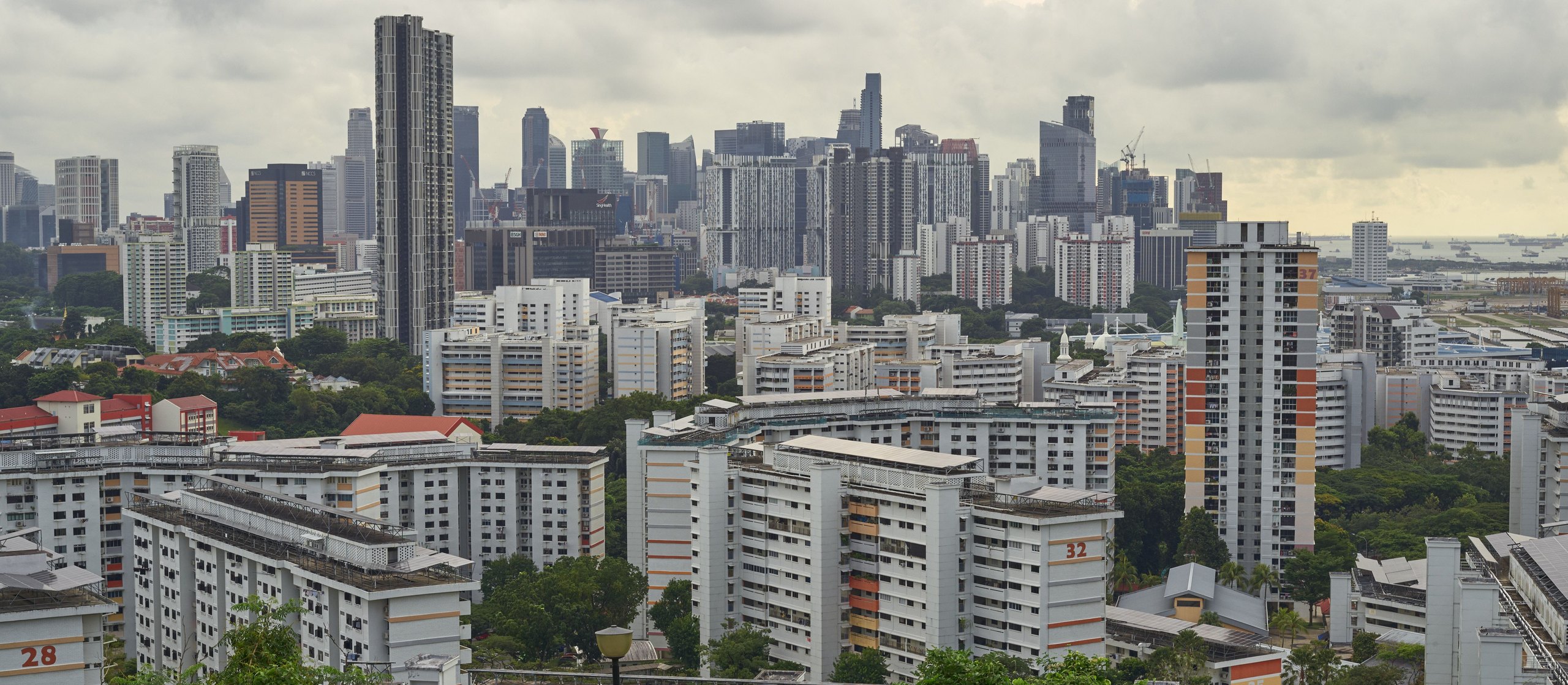
View of HDB estates with the Singapore city skyline behind

Step 3: selling costs

Then there are the costs of selling itself. These include your agent’s fee and the legal fee for the resale, plus small administrative costs. In our example we use $17,000 as a round figure.

Your own number will depend on your agent and your law firm, so ask for a written estimate upfront. A good agent will tell you this on day one, not on completion day. If anyone is vague about it, that is a red flag.

A note on timing: when does the money actually arrive?

This part is easy to miss. Your sale proceeds arrive late in the process. Once your HDB sale completes, your loan is cleared and your CPF refund is processed. In my experience, the CPF refund is back in your account in about three weeks.

The catch is that your condo needs some payments before that happens. The 1% option fee has to be paid when you take up the condo, and buyer’s stamp duty is due within 14 days of exercising the option. Both have to come from your savings. So even if your numbers look healthy on paper, make sure you have enough liquid cash to bridge the gap.

Putting it together: what can you do with $483,000?

Let us test it against a real goal. Say you want a $1.5M condo. A 25% downpayment is $375,000, and buyer’s stamp duty on $1.5M is about $44,600. So you need around $420,000 upfront, in cash and CPF combined.

Can $483,000 cover a $1.5M condo upfront?. What you have $483,000, What you need $420,000Can $483,000 cover a $1.5M condo upfront?What you have$283K cash + $200K CPF$483,000What you need25% down + stamp duty$420,000Leaves about $63,000 for legal fees, renovation and moving.

Swipe sideways to see the full chart

In this example it works, with roughly $63,000 left over. But that $63,000 has to cover legal fees, renovation, furniture and moving. It looks comfortable until you start pricing a renovation. This is why I plan with a buffer rather than to the last dollar.

Cash and CPF are not interchangeable

Some costs have to be paid in cash. The option fee is one, and a bank loan needs at least 5% of the price in cash. Your CPF can cover other parts, subject to limits. So it is not enough to ask “do I have $420,000?” You need to ask, “do I have enough cash, and enough CPF, for each step?”

Four mistakes I see again and again

1. Budgeting with the sale price

It is the most common one by far. Start from your cash and your CPF, and work up from there.

2. Treating the CPF refund as spendable cash

It returns to your Ordinary Account, which is great for your next home, but it will not pay for your renovation contractor.

3. Forgetting the interest

The 2.5% accrued interest is easy to overlook. Over several years it adds up, so always use the figure from your own dashboard, not a guess.

4. Finding out your numbers after you have made an offer

Work out your figures before you start viewing, so you are never forced to decide under pressure.

What if the numbers are tighter than you hoped?

Do not panic if your cash is lower than you expected. It is far better to know now than after you have signed anything. You have options: adjust your budget, look at a slightly smaller or older condo, give yourself a longer runway before you sell, or consider other routes like an EC. I walk clients through these trade-offs all the time, and there is almost always a version of the plan that works.

Your quick worksheet

Print this, or copy it into your notes, and fill in the blanks with your own figures.

Your numbersAmount
Expected sale price$ ________
Less: outstanding HDB loan- $ ________
Less: CPF refund (including 2.5% interest)- $ ________
Less: selling costs (agent and legal)- $ ________
Cash in hand$ ________
CPF back in your Ordinary Account$ ________

Once you have your cash figure, the next questions are about order and timing. Have a read of Sell First or Buy First? and The Hidden Costs of Upgrading next. They build on exactly what we covered here.

Want me to run your numbers?

Every situation is different. Send me your loan balance, your CPF figure and your target budget, and I will show you exactly what you walk away with. It is free and there is no obligation.

About June Ling

A well-established name in the real estate industry, June Ling is a two-time Rising Millionaire (2024, 2025) with a proven track record of transacting over S$80 million in real estate. She began her career as the company-wide Top Rookie of the Year in 2023 and has since built and led a high-performing team.


Renowned for her strategic insight, market clarity, and disciplined execution, June advises clients across private residential, HDB, and co-living investments. Her approach goes beyond transactions, focusing on structuring decisions that align with long-term wealth objectives. Whether guiding homeowners, investors, or first-time buyers, June delivers clear, data-driven advice and seamless execution across every stage of the process.

June Ling, PropNex Associate Division Director in Singapore

FAQ

No. Your outstanding loan, your CPF refund (with interest) and your selling costs all come out first. In our example, a $650,000 sale leaves about $283,000 in cash, with $200,000 returning to your CPF.

Yes. You return the CPF you used plus the accrued interest, which is 2.5% a year. The Home Ownership dashboard in my cpf shows the figure.

It goes back into your Ordinary Account, and you can use it for your next home subject to CPF rules, including the limits that apply to private property. It is worth checking the current rules with CPF before you finalise your budget.

Log in with Singpass, go to my cpf and open the Home Ownership dashboard. It shows how much you have used and the accrued interest.

On completion, your loan is repaid and your CPF refund is processed. In my experience the CPF refund is back in your account in about three weeks. Keep enough cash aside for the option fee and stamp duty in the meantime.

It depends on your agent and your law firm. We use $17,000 as a round example. Ask for a written estimate upfront so there are no surprises.

Kickstart Your Property Journey